Kia ora koutou :) Last term our school theme was based on tuna and takakau. I was meant to post this last term but was busy with other mahi. My question was the history of tuna. I didn't find much hard about this topic an actually enjoyed this topic. The easy part was finding the information on the tuna because their is one sight that really helps called te ara with anything based around maori and it's history.
Friday, July 28, 2017

Wednesday, July 5, 2017
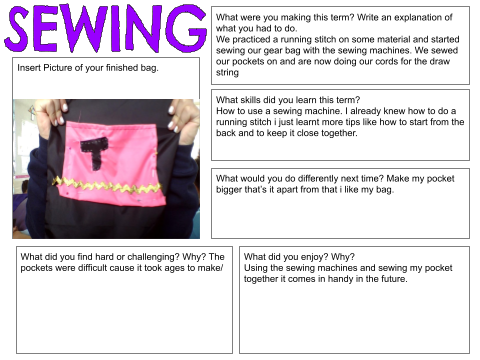
Gear bag reflection
Hello! For our year 7-8 technology we are doing gear bags. This is my reflection about how i felt about doing our gear bags. My gear bag came out a bit different i didn't think it would look like that but it still looks ok :) Here is my reflection.
Tuesday, July 4, 2017
Pick a path story
Kia ora eveyrone our task for writing was to make a story related to Matariki. A pick a path is when you have options in the story. I worked with my friends Ocean and Adelia to help me finish my story and present it. I found making up the story and making up options a bit difficult and i found most of the story to make pretty easy. Here it is :)
Thursday, June 29, 2017
Matariki
Kia ora everyone because it is nearly Matariki our class had a task to do a presentation on Matariki and new years around the world. I partnered up with my friend Ocean for this task. Here it is :)
Tuesday, June 20, 2017
Hinaki & Takakau presentation
Kia ora guys at our school we had a competition for Tuna (eel) and Takakau (bread) this was our presentation on our hinaki. A hinaki is a traditional maori eel trap. We made us one and unfortunately didn't catch anything with it. We used a recipe on the internet to make our takakau this is our presentation.
Thursday, May 18, 2017
Tuna report
Hi this is my report about New Zealsnd tuna
Tuna
Opening statement: There are two main types of eels or tuna in New Zealand- The longfin and the shortfin eel. There are only 16 freshwater eels around the world. Longfin eels are one of the largest eels in the world and are the only endemic freshwater eel to New Zealand. There are fewer eels today due to the cause of commercial fishing and the loss of wetlands. The scientific name for eels are Anguilla dieffenbachii.
Appearance
Tuna come in a variety of different colours but they are usually dark brown, black or grey. Although very rarely they can be fully yellow or partially yellow. Longfin eels have poor eyesight but have other great senses to help them survive. Eels can absorb up to 50% of their oxygen through their skin which can get slimy when they are stressed. They have large mouths with sandpaper like teeth that point inwards. They also have sensors that looks like white spots around their mouth to help them detect any movement in front of them.
Habitat
Freshwater eels can be found all around New Zealand. They are mainly found in rivers or inland lakes usually well inland from the coast. Eels can be able to climb up waterfalls up to 20 meters high while trying to find a river upstream. Longfin eels can survive in many conditions such as dams and drains and can also swim up underground streams. During daylight the main places to find tuna are in water weeds, tree roots, undercut banks and debris piles. They can also squeeze into small gaps and make holes in the mud. Adult longfin eels like fast flowing water and will be found more upstream. While short fins prefer a slower flow in the water. Short Fins are mostly found in swamps, lakes , streams and rivers near the coast. However both species are often found in the same place.
Lifecycle
During summer the female eels body changes as it is reaching maturity. Her eyes will enlarge, Their digestive systems shrinks away, Her big bulging heads become more flatter, their belly goes gold and their causinback goes brown.It will take many months for the eels to reach their breeding destination. Which is somewhere in the tropical waters near Tonga. Once they reach their breeding grounds a huge mass of eels will twist together to fertilise the eggs. The fertilised eggs will then float up to the surface of the water and grow into a leaf shaped larvae. They will then become apart of ocean plankton and will be carried from the currents to the coast of New Zealand. The larvae will head towards rivers and streams to find a new home. Their flat bodies will change transparent and these are called glass eels. As they grow they will then change into elvers which are the young eels that feed on insects and snails. As they move upstream the elvers are able to climb steep waterfalls. Then they will turn into fully grown eels and continue their life cycle
Diet
An eel is a carnivore which means it only eats meats it also likes it’s food being alive when it eats it. Small eels will like to eat insect larvae, worms and water snails. As they grow older they can begin eating fish. They will also be able to eat freshwater crayfish and and even small birds such as ducklings. An eel will usually be seen hunting at night, they don’t hunt by vision but have other strong senses such as smelling to help it hunt for food.
Closing statement: Pollution is also another main reason why the eel habitat is being destroyed. Caused by sewage and effluent from meat works, pulp and paper plants that are being discharged into the rivers causing large quantities of oxygen being removed from the water.
Tuesday, April 11, 2017
A.N.Z.A.C poster
Me and my friend Darvaye worked together and came up with our question. Our question was what started the war and how did it end. Here is our presentation.
Subscribe to:
Posts (Atom)